Why Your Map Rank Changes When You Step Outside the Office
Imagine this: You are sitting at your desk in your office. You open your phone, type your primary service into Google, and there you are – #1 in the Google Map Pack. You feel a surge of pride. Your google business profile seo efforts are finally paying off. You decide to celebrate by heading to a café three blocks away. While waiting for your latte, you check the rankings again. Suddenly, you’re at #4. By the time you drive two miles to a client meeting, your business has vanished from the top results entirely.
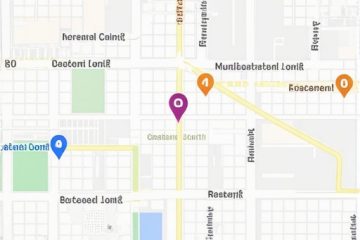
This isn’t a glitch in the system. It’s what we call the “Lobby Trap,” and it’s driven by the most powerful, yet frustrating, component of the local search algorithm: the Proximity Filter. As a Local SEO Consultant and Google Business Profile Product Expert, I see this confusion daily. Business owners assume that if they rank at their office, they rank for the whole city. In reality, Google’s local results are hyper-dynamic, shifting street-by-street based on where the user is standing.
Google officially cites proximity as one of the top three ranking factors. It is the “where” of the search query, and in 2025 and 2026, Google’s ability to pinpoint a user’s location has become so precise that even a few hundred feet can change the competitive landscape. If you want to understand why your shop disappears two blocks away, you have to understand how Google balances distance against authority.
The P-R-P Model: The Three Pillars of Local Ranking
To master google business profile seo, you must understand the P-R-P model. This is the framework Google uses to determine which three businesses earn a spot in the coveted Map Pack. While proximity is the focus of today’s discussion, it never acts alone.
- Proximity: This is the physical distance between the searcher and your business. Google’s goal is to provide the most convenient solution. If two businesses are equal in every other way, the closer one wins.
- Relevance: This is how well your business profile matches what the user is looking for. This includes your primary and secondary categories, the services you list, and the keywords found in your reviews and on your website.
- Prominence: This is the “fame” of your business. It is determined by your review count, your star rating, your backlink profile, and how often your brand is mentioned across the web.
I often tell my clients: “Local SEO isn’t just marketing; it’s infrastructure.” You are building a digital foundation that tells Google exactly where you are and why you deserve to be seen. If your prominence is high enough, you can actually “push” your proximity radius further out, overcoming the natural decay that happens as a searcher moves away from your front door.
Why Your Ranking Tracker is Giving You a False Sense of Security
One of the biggest mistakes business owners make is relying on “vanity metrics” from traditional SEO tools. Most standard rank trackers use a single zip code or a static IP address located at a data center to check your position. This provides a single data point that is often completely disconnected from the reality of a mobile user on the move.
If your tracker says you are #1 in “Austin, TX,” it’s likely checking from the geographic center of the city or a specific node. But what about the neighborhoods to the North? What about the suburbs? Traditional tracking creates a blind spot that leads to a false sense of security. You might think you’re dominating the market when, in reality, you are only visible within a half-mile radius of your office.
To truly understand your performance, you need a google maps rank tracker that utilizes a grid-based system. Instead of one data point, these tools check your ranking at hundreds of specific coordinates across your city. This allows you to see exactly where your “geofence” ends. If you find that your visibility drops off sharply at a certain intersection, you know exactly where you need to focus your hyperlocal optimization efforts. You can learn more about why your ranking tracker might be lying to you in our deep-dive guide.
The Science of the “Geofence”: How Google Calculates Your Reach
The “Geofence” isn’t a hard line on a map; it’s a fluid boundary determined by Google’s AI and “Neural Matching” updates of 2025 and 2026. Neural Matching allows Google to understand the *intent* behind a search even if the keywords aren’t an exact match. However, this AI sophistication has also made the proximity filter more sensitive.
Google creates a virtual boundary around your business based on the density of competition and the category of your business. For example, a coffee shop has a very small geofence – perhaps only a few blocks – because there are so many options nearby. A specialized neurosurgeon, however, might have a geofence that spans fifty miles because their services are rare and highly relevant to specific queries.
Research data shows a phenomenon called “natural decay.” As a user moves away from your physical location, the weight of the “Proximity” factor increases, while the weight of “Prominence” must work harder to compensate. If your profile isn’t optimized for google business profile seo, your decay curve will be steep. Strong businesses with high prominence can maintain their rank even as distance increases, effectively “breaking” the geofence that traps their smaller competitors.
Breaking the Geofence: How to Expand Your Ranking Radius
If you can’t move your office to the center of the city, how do you rank further away? Expanding your ranking radius requires a shift from general SEO to hyperlocal strategy. You need to prove to Google that your relevance and prominence are so high that they outweigh the inconvenience of a few extra miles of travel.
1. Hyperlocal Content Strategy
Stop writing generic blog posts. If you want to rank in a specific neighborhood, you need to write about that neighborhood. Create “Location Pages” on your website that discuss local landmarks, community events, and specific projects you’ve completed in those areas. This creates a digital footprint that connects your business to those coordinates.
2. Review Velocity and Geo-Diversity
Google looks at where your reviewers are located when they leave a review. If 100% of your reviews come from people standing in your lobby, you aren’t proving your reach. Encourage customers to leave reviews after they get home. A consistent stream of 5-star reviews from different parts of the city signals to Google that you are a trusted authority across a wide area.
3. NAP Consistency in the 2025/2026 Landscape
Name, Address, and Phone number (NAP) consistency has always been important, but recent updates have placed even heavier weight on it. Google’s AI now cross-references your NAP data with thousands of “unstructured citations” – mentions of your business on news sites, local blogs, and social media. If your data is fragmented, Google loses confidence in your location, and your geofence shrinks.
4. The Power of Local Backlinks
In the world of google business profile seo, a backlink from a local little league team or a neighborhood association is often more valuable than a link from a high-authority national blog. Why? Because it anchors your business to a specific geographic entity in Google’s Knowledge Graph. Use local seo tools to identify where your competitors are getting their local mentions and aim to replicate their success.
Industry-Specific Proximity Challenges (Contractors vs. Storefronts)
The proximity filter behaves differently depending on your business model. Storefronts (like retail shops or law firms) rely on customers coming to them. Service Area Businesses (SABs), like plumbers, roofers, and HVAC technicians, go to the customer. This creates a unique “SAB Trap.”
Many contractors believe that by selecting a large service area in their GBP settings, they will rank across that entire area. This is a myth. Google still uses your verified physical address (even if it’s hidden) as the “centroid” for your rankings. Research into low visibility fixes for 2026 shows that SABs often face more proximity volatility because they lack the “Prominence” signals that a physical storefront provides, such as consistent “check-ins” and foot traffic data.
For contractors, proximity is often the #1 reason for a lack of leads. If you are a plumber based in the suburbs, you will struggle to rank in the city center against a competitor who has a physical office there, regardless of how many “service areas” you check off in your dashboard.
5 Maps Troubleshooting Fixes for the 2026 Proximity Filter
If you’re frustrated by your disappearing act on Google Maps, use this quick-fire checklist to audit your presence:
- Audit Primary and Secondary Categories: Ensure your primary category is the most specific match for your highest-value service. Don’t let “General Contractor” be your primary if you are actually a “Roofing Contractor.”
- Use Advanced Tracking: Implement a google maps rank tracker to see your real-time grid. If you don’t know where you’re failing, you can’t fix it.
- Clean Up Unstructured Citations: Use local seo software to find and fix old addresses or phone numbers lurking on forgotten local directories or blog mentions.
- Optimize Service Area Settings: While it won’t magically make you rank 50 miles away, ensuring your service areas are tightly defined and match your website’s location pages can help with relevance.
- Implement 2026 Schema Updates: Ensure your website uses the latest Local Business Schema, including “areaServed” and “geo” properties to explicitly tell Google your coordinates. For more help, check out our 15-minute local SEO audit.
Conclusion: Don’t Let the Proximity Filter Stop Your Growth
The reality of local search in 2026 is that standing still is the same as falling behind. Google’s algorithm is designed to be helpful to the user, not the business owner. If you want to expand your reach and stop being invisible two blocks away, you must move beyond basic profile setup and embrace a comprehensive google business profile seo strategy.
By focusing on the P-R-P model – Proximity, Relevance, and Prominence – you can build the digital authority necessary to push back against the proximity filter. Don’t rely on the “Lobby Trap” to tell you how you’re doing. Perform a professional audit using SEO Viper Tools today to see your real-time ranking grid and identify exactly where your geofence ends. It’s time to take control of your local visibility and ensure that no matter where your customers are standing, they find you first.